Over the years I have encountered customers who painted their galvanized cooling towers for a variety of reasons — aesthetics, the desire for a corporate color scheme, or the belief that an additional coating would enhance the rust protection provided by the galvanizing. Some used standard latex or alkyd paint. Others invested in sophisticated epoxy-based formulations specifically marketed for corrosion protection. The practice is common enough that it deserves an honest look.
My General Position
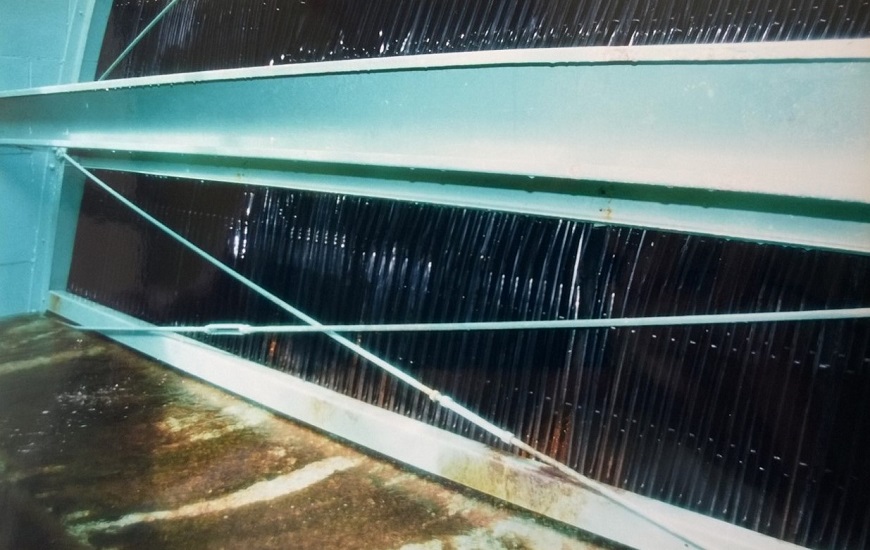
I generally discouraged barrier coatings on galvanized cooling towers unless the application involved zinc-rich compounds used for specific repairs or touch-ups to areas where the galvanizing had been depleted. This position was not based on ideology but on two consistent observations from field experience.
The first concern is ongoing cost. A painted tower is not a one-time investment — it requires periodic repainting to maintain the barrier. The galvanizing beneath the paint degrades at essentially the same rate whether painted or not; the paint simply masks the progression until repainting is due or until a failure becomes visible. This creates a maintenance cycle with real recurring cost that is often underestimated at the time of the initial decision.
The second concern is hidden corrosion. This is the more serious problem. Corrosion frequently develops beneath a visually acceptable painted surface. The paint film, particularly in the wet, chemically active environment of a cooling tower, develops micro-failures — porosity, delamination at scratches and dents, failures at fastener penetrations — that allow moisture and oxygen to reach the metal beneath. The zinc and steel then corrode in a contained environment, out of sight, while the external surface appears intact.
During inspections of painted towers, I have found advanced corrosion in areas that looked perfectly fine from the outside. The only way to discover it was to probe the paint surface at suspicious areas or find blistering that indicated active corrosion beneath. By the time visible blistering appears, significant section loss has often already occurred.
What the Research Says
The technical literature on this topic is genuinely conflicted. Some case studies and salt spray test results support the conclusion that properly prepared galvanized surfaces, combined with high-quality barrier coatings applied correctly, provide enhanced corrosion protection compared to galvanizing alone. These studies typically involve carefully prepared laboratory or controlled field conditions with high-quality epoxy systems.
Other sources and practitioners dispute these findings, arguing that the controlled conditions of such studies don't reflect the operational realities of cooling tower environments — continuous moisture, thermal cycling, mechanical contact, and the specific electrochemical conditions created when galvanizing and paint interact over time.
Both camps make reasonable arguments, and the honest answer is that the outcome depends heavily on specifics: the age and condition of the galvanizing at time of coating, the quality and type of coating system selected, the thoroughness of surface preparation, the application technique, and the ongoing maintenance commitment.
The Vulnerability of the Coating
Cooling towers are outdoor mechanical equipment. They are subject to thermal expansion and contraction, mechanical contact during maintenance, vibration, and the continuous mechanical action of water spray and airflow. All of these create conditions that degrade paint coatings faster than laboratory test conditions suggest.
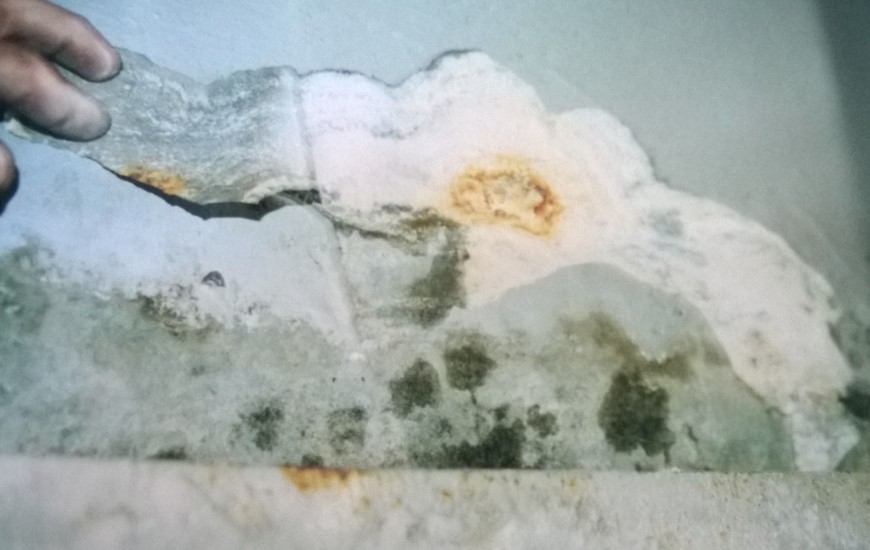
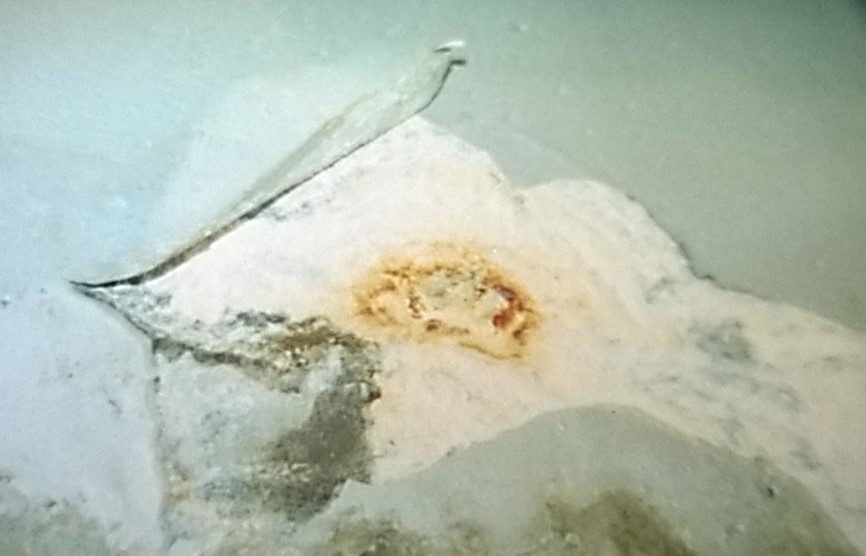
Scratches and dents — which will occur — compromise the barrier at precisely the points of greatest corrosion vulnerability. Once the coating is breached, the exposed area becomes the focus of galvanic activity, and corrosion can undercut the adjacent coating, spreading the damage laterally.
The Bottom Line
Considering the implementation costs, the maintenance demands, and what I observed in the field across many years, my recommendation is to avoid barrier coatings on galvanized cooling towers whenever feasible. The cases where they clearly make sense are limited: specific corrosion repair applications, zinc-rich touch-up of depleted areas, or situations where aesthetic requirements justify the ongoing maintenance commitment with full awareness of the costs involved.
If you have documented success with barrier coatings on cooling towers that contradicts this assessment, I am genuinely interested in hearing about it. The literature leaves room for the conclusion that well-executed applications in appropriate circumstances can be beneficial. But the bar for "well-executed" is higher than it appears, and the field evidence I've seen more often reflects the gap between that bar and what actually happens in practice.