Among the recurring frustrations of cooling tower operation, biological growth stands out for its persistence. A tower can be thoroughly cleaned, treated with biocide, returned to service, and be visibly green again within weeks — particularly in warm climates where sunlight and temperature conspire to accelerate the growth of algae and other microorganisms. If you've operated cooling towers for any length of time, you know exactly what I'm describing.
Why Algae Is Difficult to Eliminate
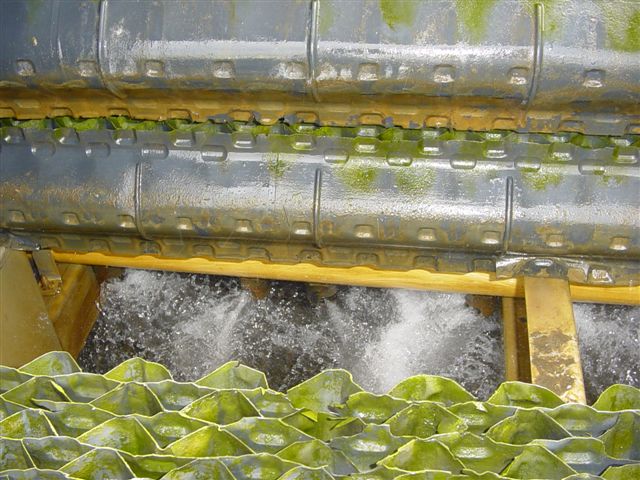
Algae in a cooling tower has everything it needs: water, sunlight (at least on the exposed surfaces), nutrients from the circulating water, and temperatures that in most operating environments fall within its growth range. Biocide treatment interrupts the biology, but it does not eliminate the environmental conditions. Remove the biocide or allow its concentration to drop, and growth resumes. This is not a failure of the treatment — it is the nature of an open evaporative system operating outdoors.
The challenge is amplified by the fact that algae doesn't require much. Thin films on wet surfaces, sheltered in crevices and on fill surfaces, can persist through biocide treatments at concentrations that would eliminate a heavier growth. The survivors reproduce, and within days or weeks the population is reestablished. For operators who want a permanent, maintenance-free solution, there isn't one.
What Actually Works
Consistent, sustained biocide programs are more effective than intermittent shock treatments. This seems obvious but is often not how treatment programs are run in practice. Many facilities treat on a fixed schedule regardless of biological conditions, then discover mid-cycle that growth has already established itself between treatments. A better approach monitors the biological state of the system and adjusts treatment timing and dosage to stay ahead of the growth rather than reacting to it.
Non-oxidizing biocides, used in rotation with oxidizing biocides, reduce the risk of resistance development. Rotating chemistries keeps the biology from adapting to a single treatment approach — the same rationale behind antibiotic rotation in medical settings. Many water treatment programs use only one biocide class and wonder why they achieve only partial control.
Physical cleaning remains essential regardless of chemical treatment. Biocide kills living cells, but dead biological material accumulates on surfaces and provides substrate for the next generation. Without periodic mechanical removal of that accumulated biomass, biocide efficacy decreases over time. Cleaning and chemical treatment are complementary — neither substitutes for the other.
Legionella: The Serious Concern Behind the Green Tower
Algae is an aesthetic and operational problem. Legionella is a health and legal liability. The same warm, wet, nutrient-rich environment that supports visible algae growth also supports Legionella pneumophila — the bacterium responsible for Legionnaires' disease. Algae mats and biofilm specifically provide favorable habitats for Legionella, since they create protected microenvironments where chemical treatment penetrates poorly.
This is not a hypothetical risk. Cooling towers have been implicated in multiple confirmed Legionella outbreaks, some fatal. Regulatory requirements for Legionella risk management have been strengthened in many jurisdictions in response. A tower with visible algae growth and an inconsistent water treatment program is a tower with elevated Legionella risk — and the visible algae is usually the more obvious indicator of a treatment program that isn't working.
Setting Realistic Expectations
When operators ask me how to get rid of algae in their cooling towers, the honest answer is that it cannot be permanently eliminated — only controlled. A well-managed treatment program, consistently applied, can maintain biological growth at levels that don't interfere with operation or create safety concerns. That is the realistic goal. The frustration I encounter most often comes from operators who have been promised a solution that doesn't require ongoing effort, and who have discovered that no such solution exists.
Consistent treatment, monitoring, and periodic cleaning are not signs that the program is failing. They are what a successful program looks like.