Earlier this month I was in San Antonio, Texas, and had the opportunity to pass through the downtown area after touring The Alamo. While leaving the area, I noticed a cooling tower installation that immediately caught my attention — not for being particularly large or unusual in scale, but for the thoughtful engineering applied to a common problem.
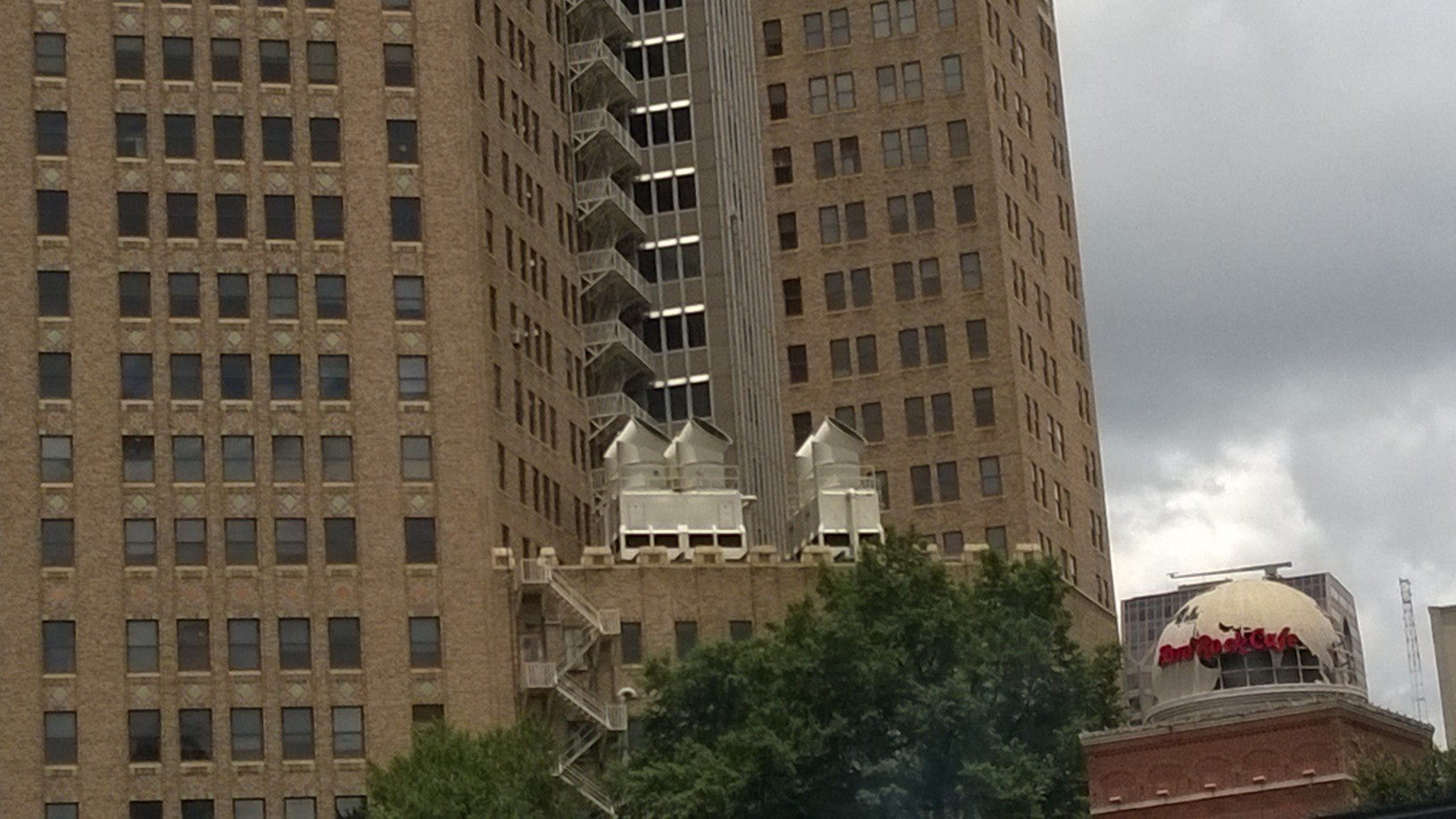
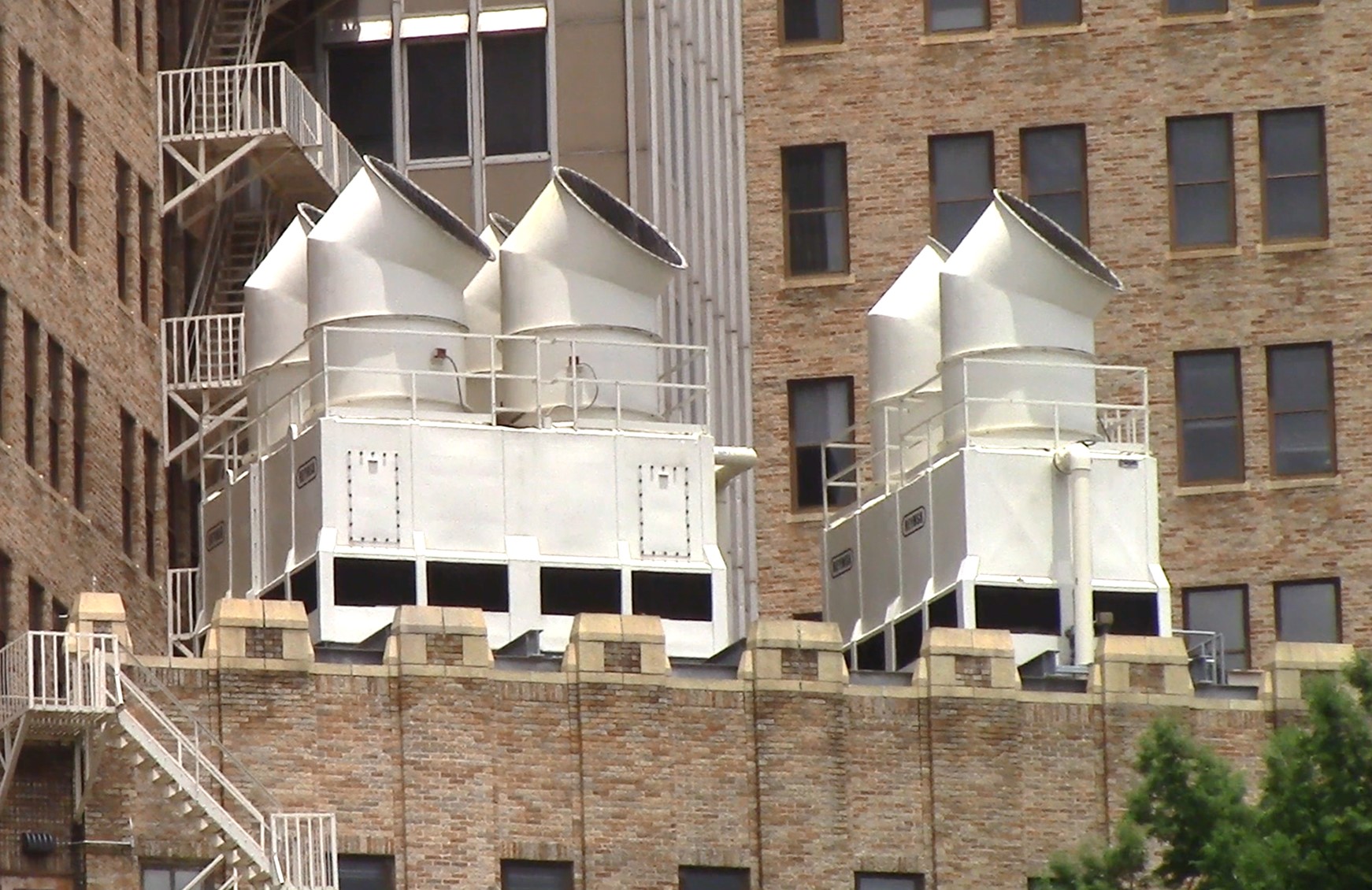
The installation in question is a six-cell, induced draft, counterflow cooling tower positioned on top of a parking structure. What made it stand out was its proximity to an adjacent building with windows — close enough that the standard upward discharge from the fans would create real problems for the building's occupants and envelope.
The Challenge
Placing cooling towers on urban rooftops and structure tops is common. The drivers are usually a combination of inconspicuousness, structural load distribution, available footprint, and ventilation access. But real estate constraints rarely come with a perfect site, and engineers frequently have to compensate for compromised locations.
In this case, the proximity of the adjacent building created multiple potential issues with a standard installation. Direct discharge toward windows could cause condensation on the glass surface, particularly during humid conditions when the warm, saturated discharge air meets cooler glass. It could also create indoor air quality concerns if any discharge air was drawn into the building through operable windows or HVAC intakes. And the continuous moisture plume directed at a building facade can accelerate weathering over time.
The Solution
The engineers addressed this by fitting each fan with directional discharge hoods — essentially shaped air directors that redirect the fan discharge away from the adjacent building rather than allowing it to rise freely. The hoods are visible in the photographs: each fan cylinder is capped with a curved structure that turns the discharge in a specific direction.
Without knowing the full design intent, I can identify several likely purposes for these hoods:
- Preventing condensation on adjacent building windows
- Addressing indoor air quality concerns for the neighboring building
- Managing excessive humidity on the building facade
- Preventing recirculation of warm discharge back into the tower's air inlets
- Protecting the fan assemblies from objects that might fall from the adjacent building
A Notable Contrast
What struck me about this installation, beyond the engineering itself, was how it stood out visually against the many other towers visible from that vantage point. Most installations nearby were standard, undifferentiated units — serviceable, functional, but nothing that would prompt a second look. This one reflected deliberate problem-solving, a willingness to invest in the right solution for a constrained site rather than defaulting to whatever was cheapest or easiest to specify.
That kind of attention to installation detail tends to predict how well a tower is maintained over its life. It's rarely a coincidence when an unusually well-designed installation also turns out to be an unusually well-maintained one.