Temperature fluctuations in process water pose one of the most damaging and underappreciated challenges for cooling tower operators. The problem is not the average temperature — it's the peaks. Production cycles in many industries create moments of elevated heat rejection that the cooling tower must handle, and when those peaks exceed the thermal tolerance of the fill material, the damage is permanent.
Fill Material Temperature Limits
Fill is the heat transfer heart of a cooling tower. It provides the surface area across which hot water contacts air, enabling evaporative cooling. Most modern cooling towers use film fill — thin plastic sheets formed into channels that maximize wetted surface area per unit volume. Film fill is efficient and compact, but it has a significant limitation: it is typically rated to withstand a maximum hot water temperature of approximately 120°F (49°C). Once water entering the fill consistently exceeds this threshold, the plastic begins to deform and eventually fails structurally.
Wood fill, found in older installations and some specialty applications, handles higher temperatures — typically up to around 140°F (60°C). This thermal advantage comes at the cost of greater maintenance requirements and susceptibility to biological growth, which is why film fill has become the dominant choice in modern towers despite the temperature limitation.
The Problem With Production Peaks
The issue arises when a tower is sized for average load conditions but the actual process creates periodic spikes. This is common across many industries. In steel mills, production cycles generate peaks daily — a heat load that may be manageable on average but creates brief temperature surges well above the fill's design tolerance. Plastic manufacturers building up seasonal inventory push their equipment harder during peak periods. Glass plants run batch processes that generate concentrated heat pulses.
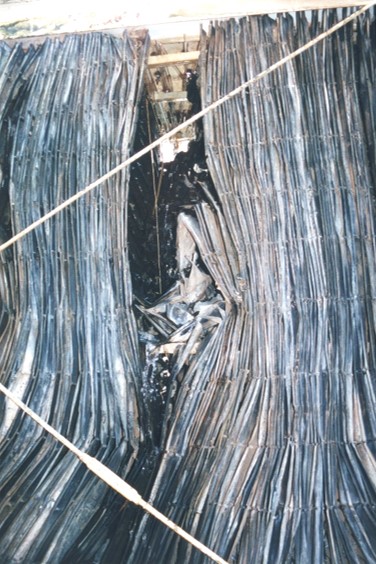
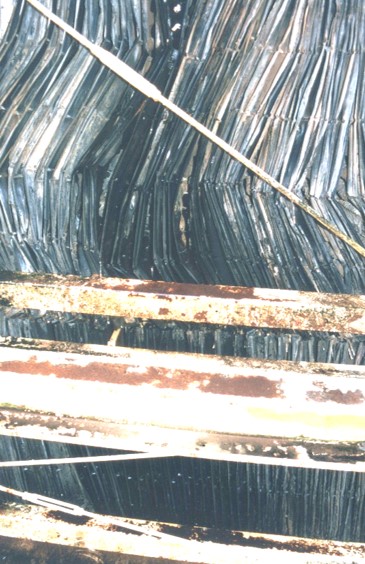
I evaluated a seven-cell cooling tower at a glass plant that had experienced exactly this problem. The fill had failed in specific zones: predominantly beneath the hot water distribution box — where water enters the fill at its hottest — and in the lower sections where the accumulated thermal damage from repeated cycles had progressed furthest. The pattern of failure was a diagnostic clue in itself; it pointed directly to the temperature peak as the cause rather than to mechanical damage or improper installation.
Mitigation Strategies
Once the problem is understood, several engineering approaches exist to protect the fill from temperature peaks.
The most robust solution is an intermediary hot water tank between the process and the tower. The tank acts as a thermal buffer, absorbing the peak and releasing heat to the tower at a controlled, more uniform rate. The tower never sees the spike — it sees a smoothed average. This requires capital investment but permanently eliminates the temperature peak problem.
An alternative is mixing: directing a portion of the cooled water returning from the tower's cold basin into the hot water return line before it reaches the tower. By diluting the hot return with cold water, the temperature entering the fill is reduced to within acceptable limits. This approach works but requires careful flow balancing and monitoring, since the dilution ratio must be maintained under varying process conditions.
Heat exchangers or air coolers — installed as a pre-cooling stage upstream of the tower — represent another option, particularly when the temperature peaks are extreme or the existing tower cannot be modified easily.
When All Else Fails
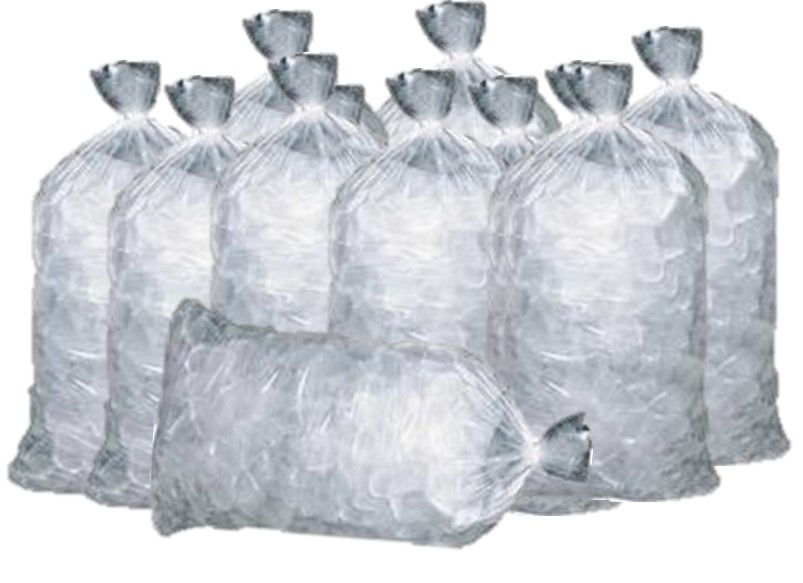
Not all operators have the luxury of engineering solutions. At one facility I visited, the customer's response to seasonal temperature peaks was to purchase bags of ice from the local supermarket and add them directly to the basin. It was inelegant, it was expensive per unit of cooling delivered, and it required labor every time the production rate spiked. But it worked, and it was what the operation could manage at the time. I found it both funny and entirely practical — the right tool for the situation, even if the situation called for a better tool eventually.
The right long-term answer is always to understand the temperature profile of your process water and ensure the cooling system is designed accordingly. If your tower was sized for average conditions and your process generates peaks, the fill will tell you eventually — usually at the worst possible time.