Vibration is a frequent problem in mechanical equipment. Machines with moving parts generally tolerate certain levels of vibration without meaningful performance degradation, but problems arise when abnormal circumstances cause vibration to exceed the design envelope. In cooling towers, this matters more than in many other applications.
Cooling towers house rotating equipment — fans, motors, drive shafts — that operate continuously, often year-round, and often in wet, corrosive, and outdoor environments. Any abnormal vibration warrants immediate attention, particularly given the tight clearances between fan blade tips and the fan cylinder wall. A fan operating out of balance doesn't just wear bearings faster; it can contact the cylinder, causing catastrophic damage in seconds.
Common Sources of Vibration
Industry professionals have identified the following as the most common sources of abnormal vibration in cooling tower mechanical equipment:
- Fan unbalance
- Uneven fan blade pitch
- Worn drive-shaft inserts, shaft, or couplings
- Worn bearings in mechanical equipment (gear reducer, motor, fan-shaft bearings)
- Inadequate gear tolerances in gear boxes
- Damage in gearbox internals
- Deterioration of the mechanical equipment support structure
- Worn belt(s) — for belt-driven equipment
- Mechanical equipment misalignment — sheaves/pulleys or drive-shafts, as applicable
- Loose fasteners in the mechanical equipment assembly and/or its supporting structure
Consequences of Sustained Vibration
The consequences of sustained abnormal vibration can be severe. At the extreme end, uncontrolled vibration can destroy mechanical equipment entirely and damage surrounding structures and equipment. Even in less severe cases, vibration accelerates wear across all rotating components, shortening bearing life, fatiguing drive-shaft connections, and gradually loosening fasteners throughout the assembly.
Beyond mechanical damage, vibration can cause discomfort for people working in nearby structures — a consideration that becomes particularly important in commercial or institutional installations where the cooling tower is located near occupied spaces.
Vibration Cut-Off Switches
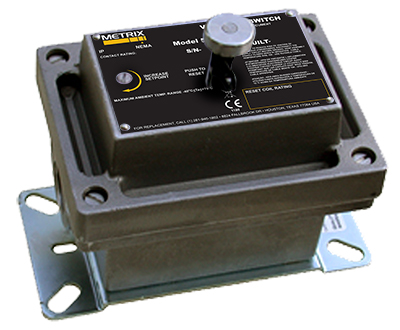
Installing vibration cut-off switches represents best practice for mechanical protection. These relatively inexpensive accessories monitor vibration levels continuously and automatically shut down the mechanical equipment when vibration exceeds a preset threshold. The cost of the switch is trivial compared to the cost of a single mechanical equipment failure.
It is not enough to install vibration switches — they must be tested regularly to confirm they are operating properly. A switch that has drifted out of calibration or been manually bypassed provides no protection at all. Regular testing should be part of any cooling tower maintenance program.
Vibration Data Loggers
For facilities with critical cooling requirements or where unexpected downtime would be costly, vibration data loggers provide a more sophisticated solution. Rather than simply triggering a shutdown when a threshold is exceeded, loggers record vibration history over time, allowing maintenance personnel to identify developing trends before they become failures. A gradual increase in baseline vibration is often the earliest warning sign of bearing wear, drive-shaft deterioration, or developing imbalance.
Analyzing vibration trends allows a planned maintenance intervention — scheduled during a convenient maintenance window — rather than an emergency repair following an unplanned shutdown.